
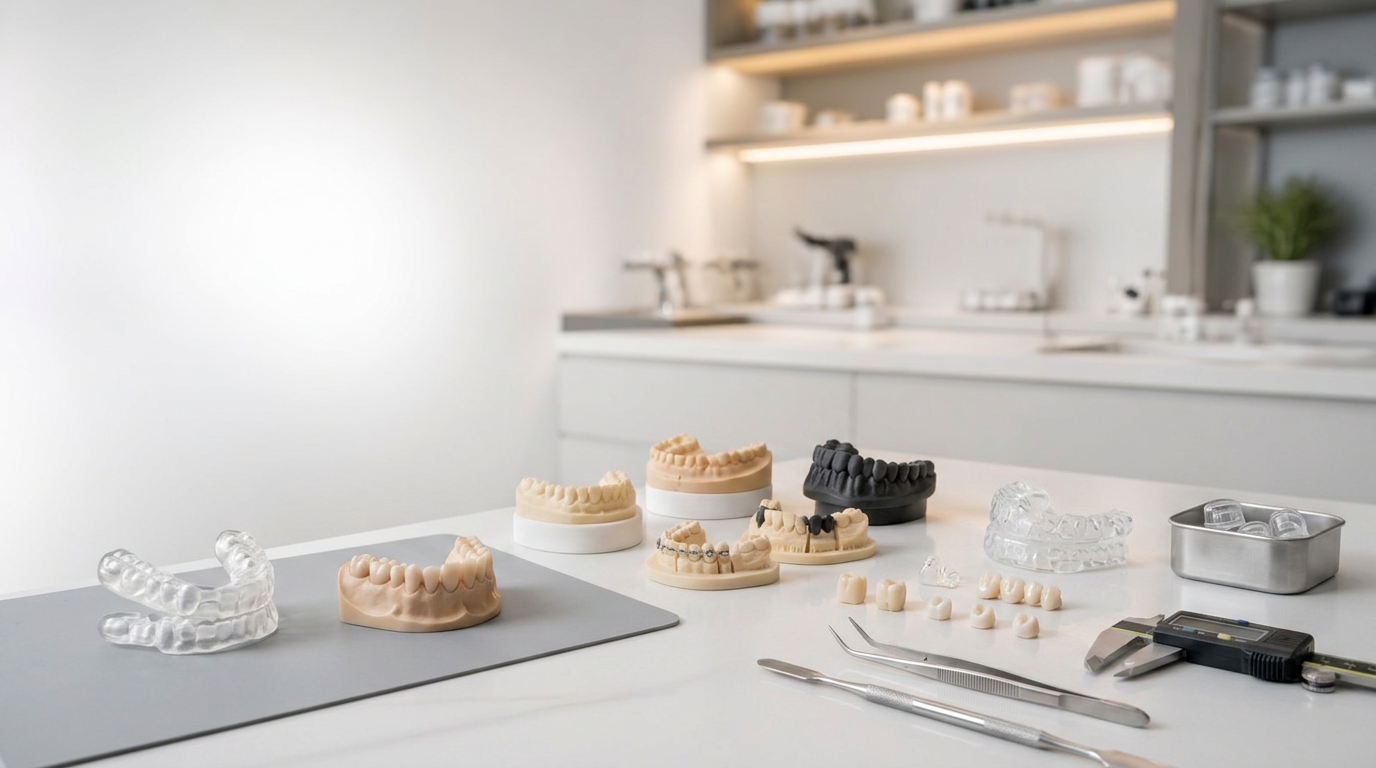
The integration of a dental 3D printer into a dental practice or dental laboratory is no longer a trend for the future, but an operational standard of the present, as we discussed in our previous article ‘Additive Manufacturing in Dentistry: A Strategic Guide to Adopting a 3D Printer’. Whether you’re producing surgical guides, orthodontic models, bite splints or temporary restorations, choosing the right machine determines the profitability and quality of the work carried out.
In this buying guide to 3D printing in the dental sector, we analyse the six crucial factors to consider before making the investment.
Below, we will analyse the features to consider when making an informed purchase:
Accuracy and Clinical Reproducibility
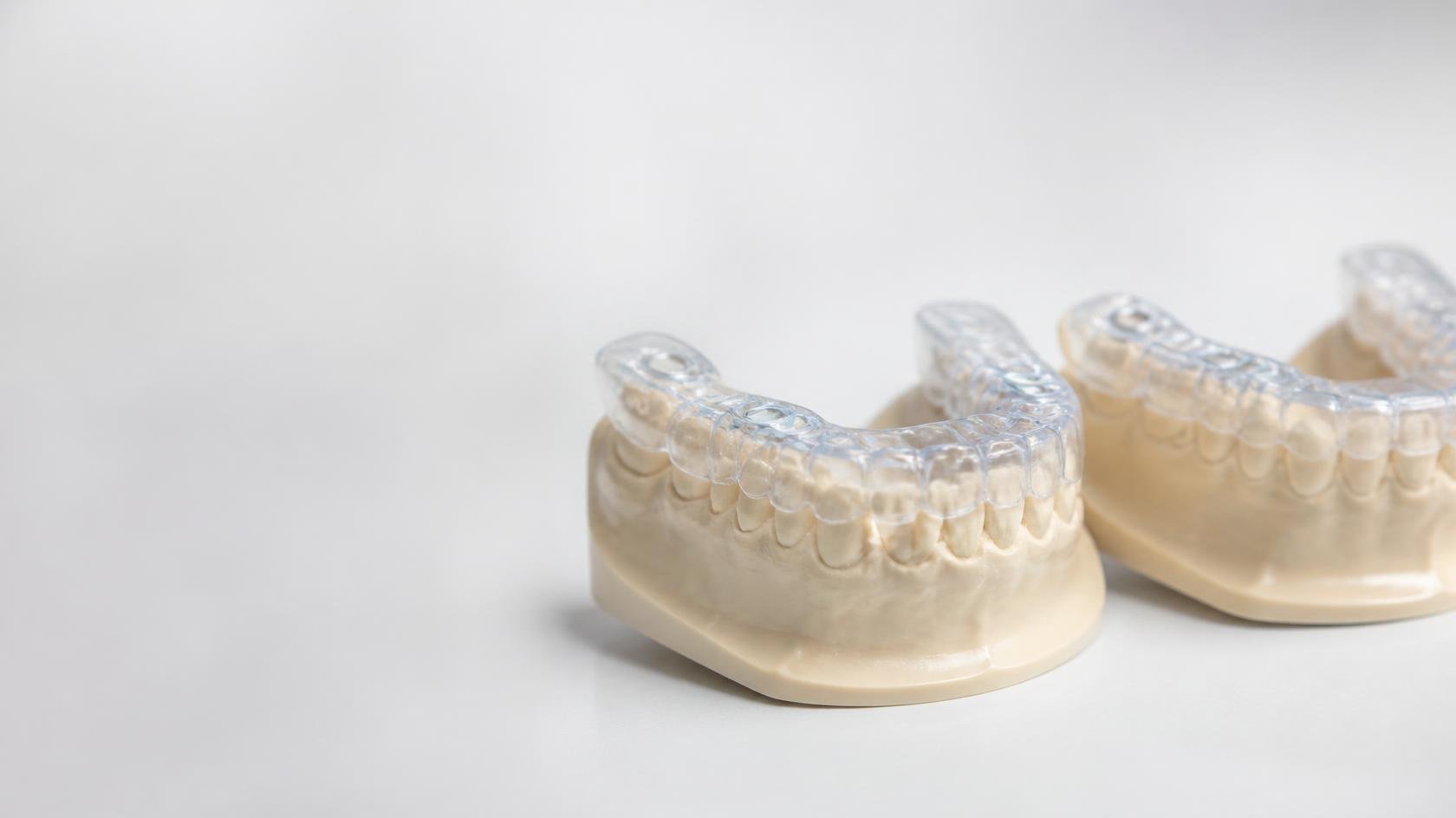
In dentistry, an error of just a few microns makes the difference between a perfect device and one that needs to be remade.
-
XY and Z resolution: This determines the pixel size (XY resolution) and the minimum layer thickness (Z-axis). For 3D printing in a dental practice, an XY resolution of around 18–35 microns is ideal.
-
Actual accuracy across the entire build plate: A high-resolution machine is not automatically accurate across the entire build area. Ask the supplier for scientific data or 3D scan tests demonstrating dimensional accuracy across the entire surface of the build plate.
Material Compatibility and Biocompatible Resins
Materials used in clinical settings must hold CE certification as Medical Devices (Class Ia or IIa) for intraoral use.
Closed Systems: These guarantee pre-validated print profiles for proprietary resins. They offer maximum ease of use and consistent results, but users are restricted to the manufacturer’s prices and product range.
Open Systems: These allow the use of third-party biocompatible resins, offering greater flexibility in terms of costs and applications, although they require manual calibration of parameters.
Dental printing technology: SLA, DLP or MSLA (LCD)?
The choice of technology has a direct impact on the printer’s speed, accuracy and maintenance:
| 3D Printing Technology | Key Benefits | Disadvantages | Ideal Application |
| SLA (Laser) | Good surface accuracy | Sequential scanning process (slower at high production volumes) | Niche production or complex individual prostheses |
| DLP (Projector) | Good speed and durability of the light source | Significantly higher purchase and spare parts costs | Very high-volume facilities focused on large volumes of traffic |
| MSLA / LCD (LED) | High productivity, extremely high resolution in the details, and fast, consistent cycle times | Scheduled routine maintenance of the LCD screen | Studios and workshops seeking maximum efficiency and professional, industrial-grade quality |
Production Speed and Build Plate Volume
Actual workload: Work out how many models or templates you need to produce at the same time. If the build plate is too small, you’ll have to split the production runs throughout the day..
Printing times: Do not just consider the speed at which the Z-axis moves. Check how long it takes the machine to print an arch positioned horizontally compared to one positioned vertically
The Post-Processing Process: Washing and Curing
A 3D printer for the dental sector alone does not complete the workflow. To ensure the biocompatibility and mechanical properties claimed by resin manufacturers, the post-production stage is essential::
-
New ‘centrifugal’ drying stations: A breakthrough in the practice/laboratory workflow. Thanks to the introduction of centrifugal systems, drying is no longer a passive process or one reliant on simple manual air blowing. By utilising centrifugal force, they instantly remove all micro-residues of solvent and resin from cavities, crevices and complex undercuts. The result is a perfectly clean and dry restoration in just a few seconds, without wasting time, ready for polymerisation and without the need for aggressive IPA treatment.
-
Washing stations: Automatic systems using isopropyl alcohol (IPA) or dedicated solvents to remove residues of uncured resin.
-
Curing Ovens (UV Curing): Certified ovens with controlled wavelengths and temperatures.
Biocompatibility note: Many manufacturers of medical-grade resins only guarantee medical-grade certification if the process is completed using validated post-curing equipment.
Slicing Software, Training and Technical Support
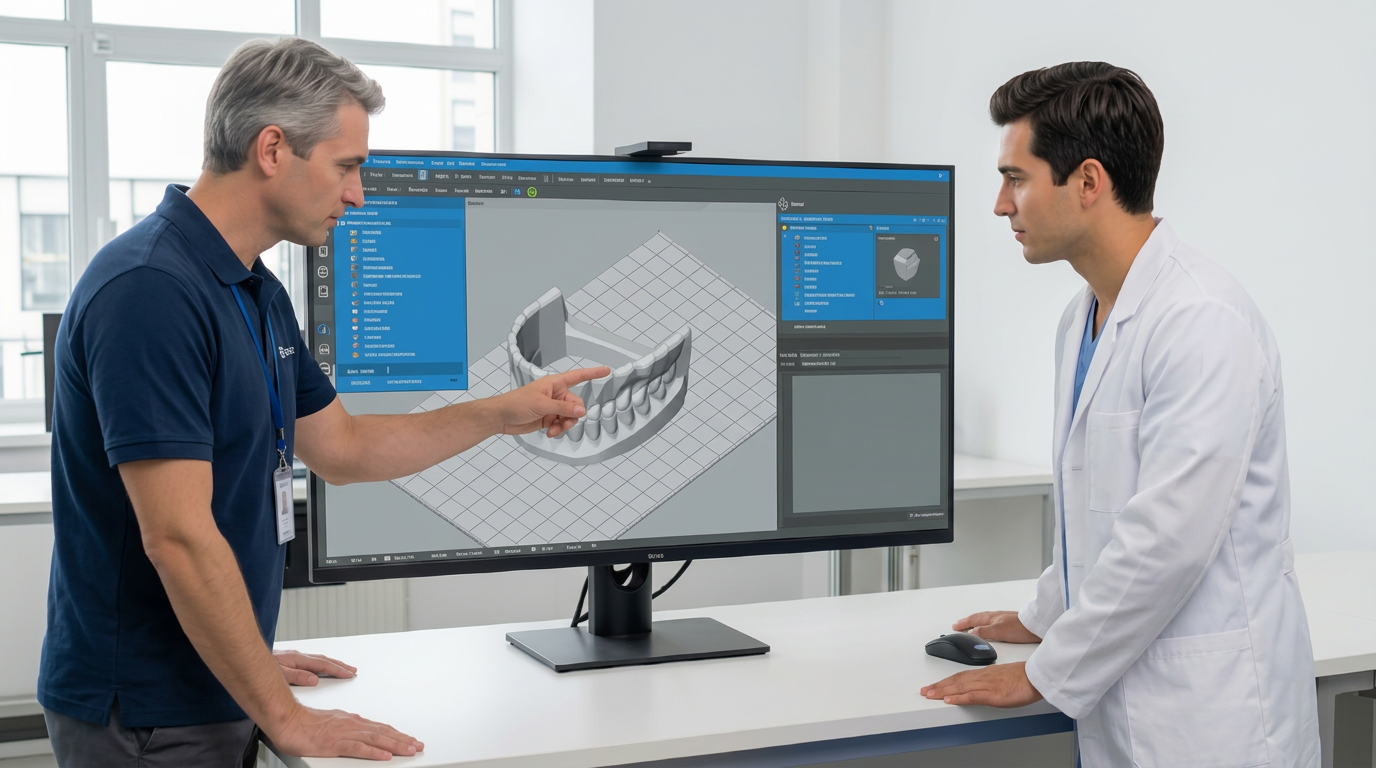
Half the true value of a dental printer lies in the hardware and half in the after-sales support.
CAD/CAM integration: Ensure that the 3D printer has built-in slicing, or that the slicing software is user-friendly and integrates with the leading dental CAD software packages (CADLynx, Exocad, 3Shape, Dental Wings).
Local technical support: Check that there is a service centre capable of guaranteeing rapid repair times or a replacement machine (‘back-up unit’).
Staff training: The supplier must offer initial support to ensure the machine is correctly integrated into the practice’s or laboratory’s operational workflows.
Conclusion
Scegliere la migliore stampante 3D dentale richiede un equilibrio tra precisione costante, gamma di resine biocompatibili e affidabilità dell'assistenza post-vendita. Mappando preventivamente le lavorazioni prevalenti della tua attività potrai identificare la tecnologia con il miglior ritorno sull'investimento (ROI). Choosing the best dental 3D printer requires striking a balance between consistent precision, a range of biocompatible resins and the reliability of after-sales support. By assessing in advance the main types of work carried out in your practice, you will be able to identify the technology offering the best return on investment (ROI).
Are you interested in finding out more about our 3D printing system?
